
If you are a computational designer, you’ve probably done this:
- Send a.gh file by email or Slack
- Drop it into Google Drive / Dropbox
- Add a message like “just move these sliders.”
- Hope the recipient has the right plugins
- Spend the next week answering setup questions
It’s common. It’s also one of the fastest ways to create security risk and support overhead, while delivering a poor user experience.
Below is a practical breakdown of the main problems and which ShapeDiver features address each one.
1) You are handing over your intellectual property
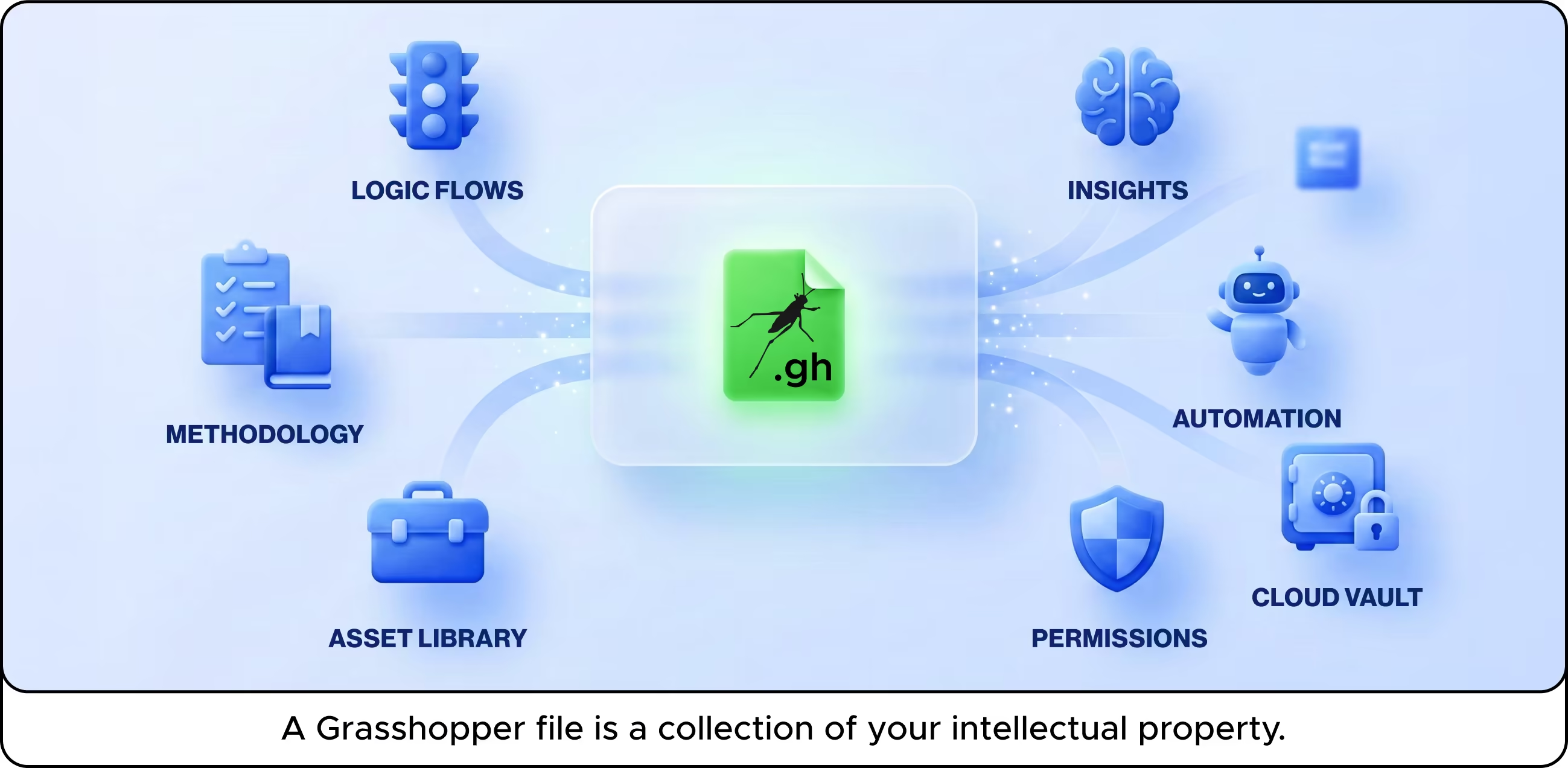
A Grasshopper definition is not “just a file”. It contains:
- your logic and methods
- your automation
- your know-how (often the part clients are paying for)
Once you share the file, you lose control over how it is copied, modified, reused, or forwarded.
How ShapeDiver fixes this
-
Server-side execution : users interact with results; the Grasshopper definition stays on the server.
-
Access control : restrict who can access a model/app and under what conditions.
- Private models and share links : share an app experience without shipping the.gh source.
Practical example: instead of sending a.gh to a client to “try options”, you publish a secure app where they can explore a controlled parameter set, while your definition remains protected.
2) “Why is it red?” - file sharing turns you into tech support
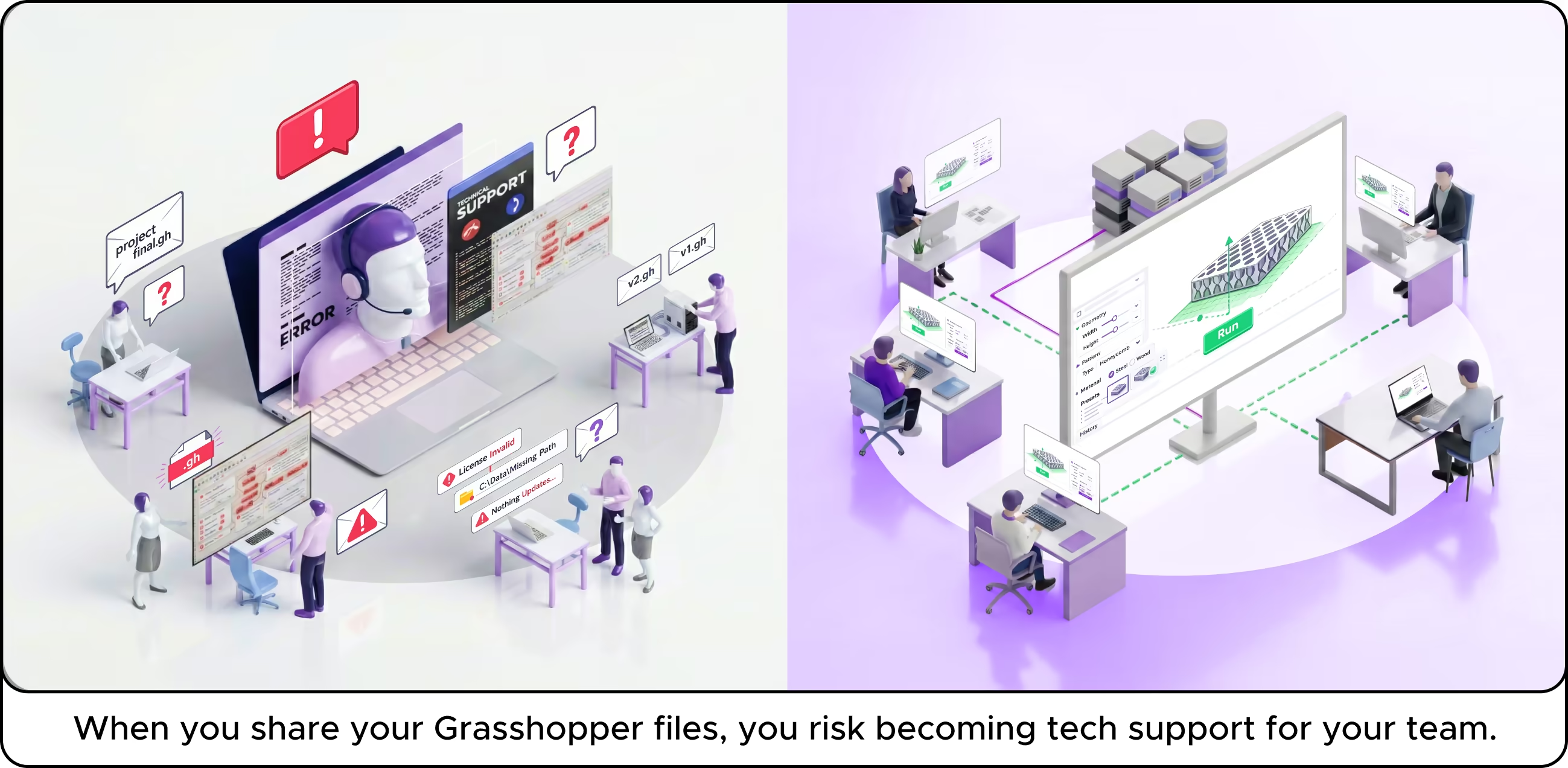
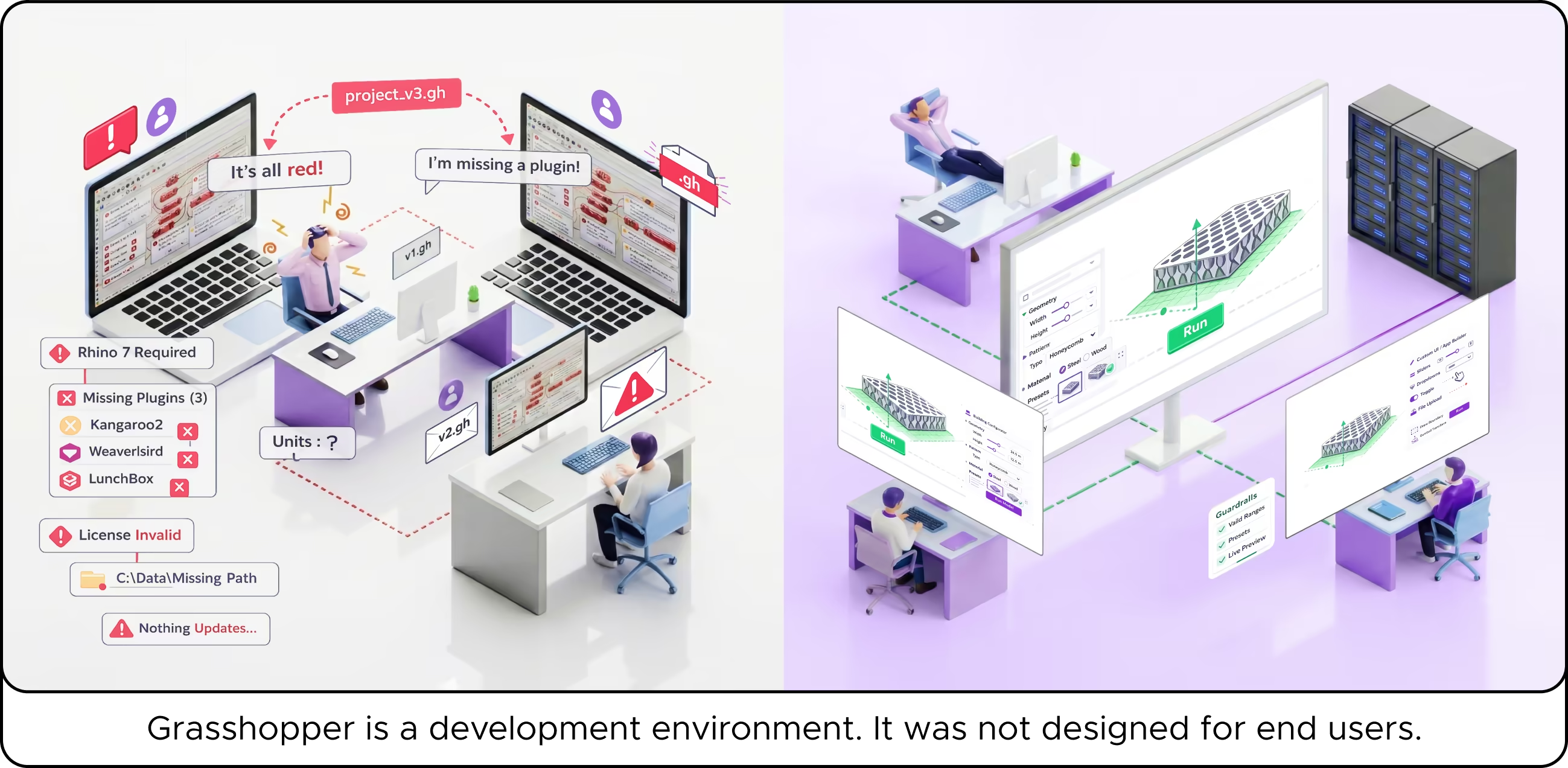
A Grasshopper file is not a self-contained deliverable. When you send it, you’re also sending an invisible checklist of requirements:
- the right Rhino version
- the right plugin set (and often the right plugin versions)
- valid licenses for paid plugins
- correct paths, units, and environment settings
- a machine that can actually run the definition
That’s why the most common response to a shared.gh file is some variation of:
- “It’s all red.”
- “I’m missing a plugin.”
- “It opens, but nothing updates.”
- “It runs on your machine, but not on mine.”
At that point, you’re no longer delivering design value — you’re debugging someone else’s setup. And the more stakeholders you add, the more that support load compounds.
How ShapeDiver fixes this
-
Server-side execution in a controlled environment : the model runs where you deploy it, not on every recipient’s laptop.
-
Centralized deployment : one published version of the model that everyone uses, instead of many local installs with unknown configurations.
-
Web delivery : users only need a browser to interact with your model—no Rhino install, no plugin hunting, no “why is it red?” calls.
Practical example: instead of onboarding a client into Rhino + plugins + licenses, you publish a link to a web app. They get outcomes; you avoid becoming the IT department.
3) Grasshopper is not a user interface
Grasshopper is a development environment. It’s excellent for building parametric logic. It is not designed for end users.
Tools like Human UI (and similar approaches) can improve the experience of using a definition by wrapping parameters into a cleaner interface. However, this doesn’t solve the rest of what makes file-sharing painful in real projects: secure distribution, controlled access, and a consistent “just works” delivery to stakeholders.
Even technical users struggle with:
- dense graphs and hidden dependencies
- parameter ranges with no guidance
- “one wrong toggle breaks everything” behavior
- unclear input expectations (units, formats, valid ranges)
So you end up anyway doing “ Human middleware” (pun intended): tutorials, Zoom calls, and long messages explaining what not to touch.
How ShapeDiver fixes this
- Web deployment: your UI runs in a browser, so sharing becomes as simple as sending a link (and it’s easy to embed). Users interact with the app while the Grasshopper definition stays under your control.
- Custom UI / App Builder tools : expose only the inputs you want, in a format users understand.
- Parameter controls: sliders, dropdowns, toggles, text inputs, file uploads, and advanced interactions such as drawing, gumball, and selection tools.
- Guardrails : constrain ranges, offer presets, and reduce the chance of invalid input.
Practical example: instead of sending a definition with 60 sliders, you publish an app with 8–12 meaningful controls, grouped logically (“Geometry”, “Performance”, “Output”), with sensible
defaults.
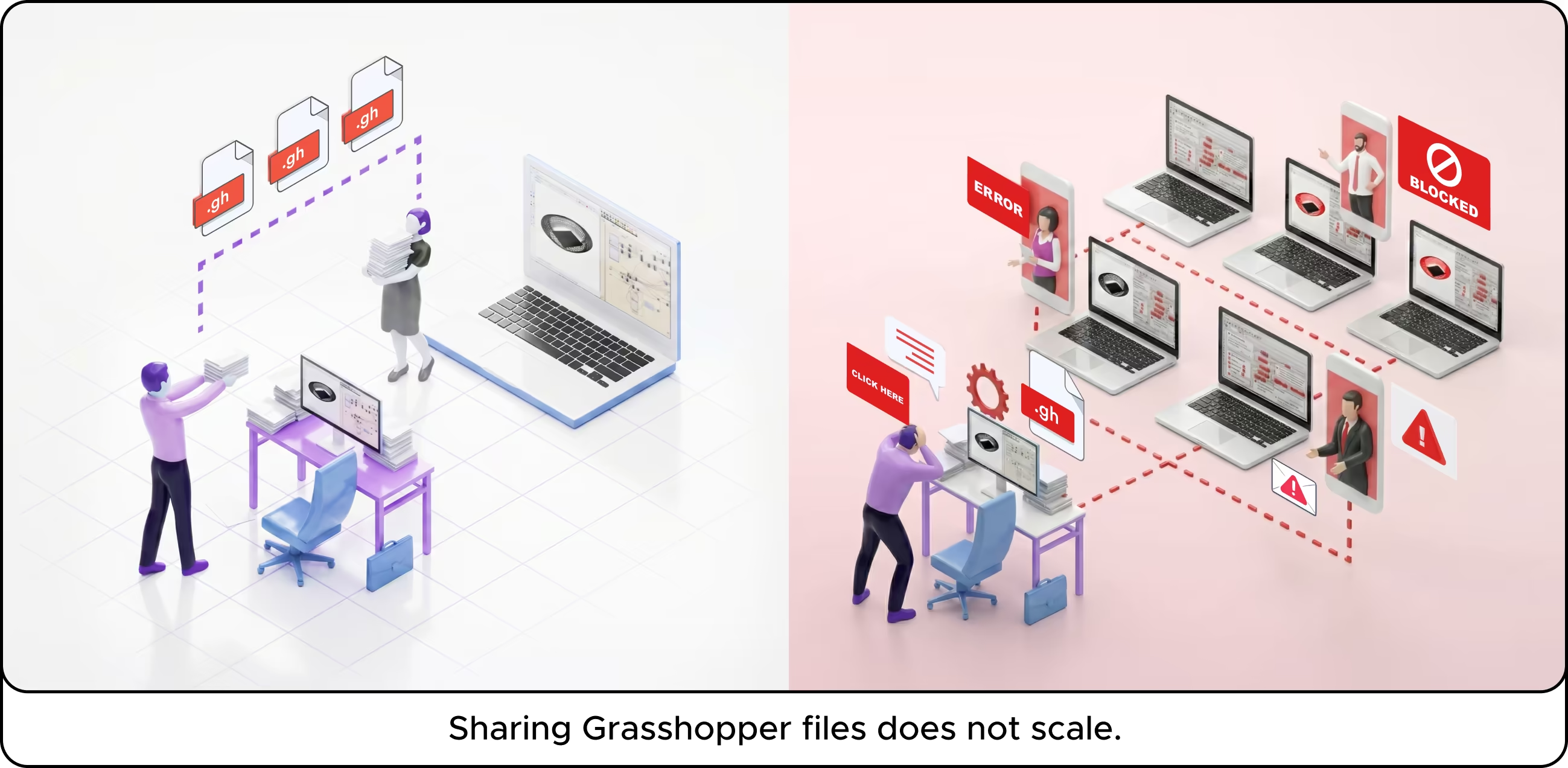
4) Collaboration does not scale when the.gh file is the deliverable
Direct file sharing works for:
- a quick internal experiment
- a one-off exchange between two Grasshopper power users
It breaks down when:
- clients need access
- non-technical stakeholders are involved
- usage becomes frequent (“run it again with these inputs”)
- you’re supporting multiple projects in parallel
At that point, the work shifts away from design and towards operational support: troubleshooting installs, answering UI questions, and re-explaining the same process.
How ShapeDiver fixes this
-
Shareable web apps : distribute access like any modern tool: a link, not a file.
-
Embedding : embed the configurator directly on a website or internal portal.
-
APIs and SDKs : integrate parametric logic into existing workflows (product pages, CPQ flows, internal tools) without exposing the definition.
Practical example: instead of “email me the inputs and I’ll run it”, stakeholders can run approved variations themselves through a web interface, and you stay focused on improving the model, not operating it.
The better mental model: ship an app, not a file
A Grasshopper definition is a powerful engine. But most people don’t need the engine — they need a steering wheel.
If you want:
- IP protection
- fewer plugin/setup problems
- a usable interface for real stakeholders
- a scalable way to share computational design outcomes
…then the.gh file should not be your deliverable.
ShapeDiver lets you keep the definition under your control and deliver a web application experience instead.

Conclusion
Sharing Grasshopper files feels fast because it avoids a “proper delivery step”. In practice, it creates the exact problems that slow projects down later: IP exposure, fragile dependencies, a UI that only the author understands, and a support burden that scales with every new stakeholder.
If you are currently sending.gh files to clients, colleagues, or partners, you don’t need to rebuild your process from scratch. You usually need one thing: a way to keep the definition under your control while letting others use it safely through a clean interface. That’s what ShapeDiver is for.
Book a cost-free evaluation call
If you want to sanity-check whether your workflow is a good fit, contact our sales team for a cost-free evaluation call. We’ll look at:
- what you’re sharing today (and with whom)
- what your definition depends on (plugins, licenses, inputs/outputs)
- what a usable web UI would look like for your stakeholders
- how to deploy it in a way that protects your work and reduces support time
You’ll leave the call with a clear recommendation whether ShapeDiver is the right tool for your case, and what the path would look like if it is.
